

Private Abdominal Ultrasound Scans in Birmingham
Book an Abdomen Scan in Birmingham
Our Sonographer

Advanced Sonographer
HCPC: RA34546
Our Charges
| Appointment Type | Pricing |
| Abdomen Scan (Male and Female) | £150.00 |
| Gynaecological (TA &TV) Scan (Female) | £175.00 |
| Renal, Bladder and Kidney Scan (Male and Female) | £150.00 |
| Abdomen and Renal, Bladder and Kidney Scan (Male and Female) | £250.00 |
| Abdomen and Pelvic Scan (Female) | £250.00 |
| Abdomen, Pelvic and Renal, Bladder and Kidney Scan (Female) | £300.00 |
Book a Scan with Sati
Specialist Abdominal Ultrasound Scans for Men and Women
At Midlands Women’s Health, we provide private abdominal ultrasound scans in Birmingham for both male and female patients, offering detailed diagnostic imaging to assess the health and appearance of your internal abdominal organs.
Our abdominal ultrasound examinations are performed by an experienced, qualified Sonographer, providing professional, high-quality imaging in a comfortable, welcoming and supportive clinical environment.
Whether you are experiencing abdominal pain, persistent bloating, digestive discomfort, abnormal liver function tests, suspected gallstones or kidney-related symptoms, an abdominal ultrasound can provide valuable information to help identify potential causes and guide further medical assessment.
Using ultrasound technology, we can examine several important abdominal organs, including the liver, gallbladder, kidneys, pancreas, spleen and abdominal aorta.
Our service is available to both men and women, providing accessible private diagnostic imaging with a personalised approach to patient care.
What Is an Abdominal Ultrasound Scan?

An abdominal ultrasound scan is a safe, non-invasive diagnostic examination that uses high-frequency sound waves to create images of the organs and structures inside your abdomen.
Unlike X-rays or CT scans, ultrasound does not use ionising radiation, making it a widely used imaging technique for investigating abdominal symptoms and monitoring certain medical conditions.
During your examination, your Sonographer moves a handheld ultrasound probe across your abdomen, using a water-based gel to produce clear images of the internal organs.
An abdominal ultrasound can help investigate a range of conditions, including:
- Gallstones and gallbladder abnormalities – including signs of inflammation or obstruction.
- Fatty liver changes – identifying ultrasound appearances associated with fat accumulation in the liver.
- Liver abnormalities – including enlargement, cysts and certain structural changes.
- Kidney stones and kidney abnormalities – assessing visible stones, cysts and urinary tract dilatation.
- Pancreatic abnormalities – assessing visible changes in the pancreas.
- Spleen enlargement – examining the size and appearance of the spleen.
- Abdominal aortic aneurysm – assessing enlargement of the abdominal aorta.
- Abdominal fluid – identifying abnormal collections of free fluid.
An abdominal ultrasound can also be used to monitor previously identified abnormalities or investigate unexpected findings from blood tests.
What Does an Abdominal Ultrasound Scan Examine?

A comprehensive abdominal ultrasound assesses several important organs and structures, depending on the clinical indication and what can be visualised.
1. Liver Ultrasound
The liver is examined to assess its size, shape, appearance and internal structure.
A liver ultrasound may help identify:
- Fatty liver changes (hepatic steatosis).
- Liver enlargement.
- Liver cysts.
- Certain liver lesions or masses.
- Changes in liver texture.
- Some features associated with chronic liver disease.
A liver ultrasound may be recommended if you have abnormal liver function blood tests, upper abdominal discomfort or a known liver condition requiring monitoring.
2. Gallbladder and Bile Duct Ultrasound
The gallbladder stores bile, which helps the body digest fats.
An ultrasound can assess the gallbladder and visible bile ducts for:
- Gallstones.
- Gallbladder sludge.
- Gallbladder wall thickening.
- Gallbladder polyps.
- Bile duct dilatation.
- Features that may suggest inflammation.
A gallbladder ultrasound may be particularly useful if you experience pain in the upper right abdomen, discomfort after eating, nausea or suspected gallstones.
3. Kidney Ultrasound
Both kidneys are assessed for their size, structure and appearance.
A kidney ultrasound can help identify:
- Kidney cysts.
- Some kidney stones.
- Kidney enlargement or structural abnormalities.
- Hydronephrosis (swelling caused by impaired urine drainage).
- Certain kidney masses.
- Changes associated with some chronic kidney conditions.
Kidney ultrasound may be recommended for persistent flank pain, recurrent urinary tract infections, abnormal kidney-related investigations or suspected urinary obstruction.
4. Pancreas Ultrasound
The pancreas plays an important role in digestion and blood sugar regulation.
An abdominal ultrasound may assess the visible pancreas for:
- Changes in pancreatic size or appearance.
- Pancreatic cysts or masses.
- Pancreatic duct dilatation.
- Certain structural abnormalities.
The pancreas can sometimes be difficult to visualise fully due to overlying bowel gas. Further imaging, such as CT or MRI, may be required where clinically indicated.
5. Spleen Ultrasound
The spleen forms part of the body’s immune system and is located in the upper left abdomen.
Ultrasound can help assess:
- Spleen size.
- Splenomegaly (enlarged spleen).
- Certain splenic cysts or lesions.
- Other visible structural abnormalities.
6. Abdominal Aorta
The abdominal aorta is the main blood vessel carrying blood from the heart through the abdomen.
Ultrasound can assess the diameter of the abdominal aorta and help identify enlargement, including an abdominal aortic aneurysm (AAA).
A routine abdominal ultrasound is not a substitute for a dedicated vascular assessment where one is required.
7. Additional Abdominal Findings
Depending on the clinical indication, the examination may also identify:
- Free fluid within the abdominal cavity.
- Certain abdominal masses.
- Enlargement or displacement of abdominal structures.
- Other visible abnormalities requiring further investigation.
Important: An abdominal ultrasound does not provide a complete assessment of the stomach, intestines or all causes of abdominal pain. Some conditions require additional blood tests, endoscopy, CT, MRI or specialist medical assessment.
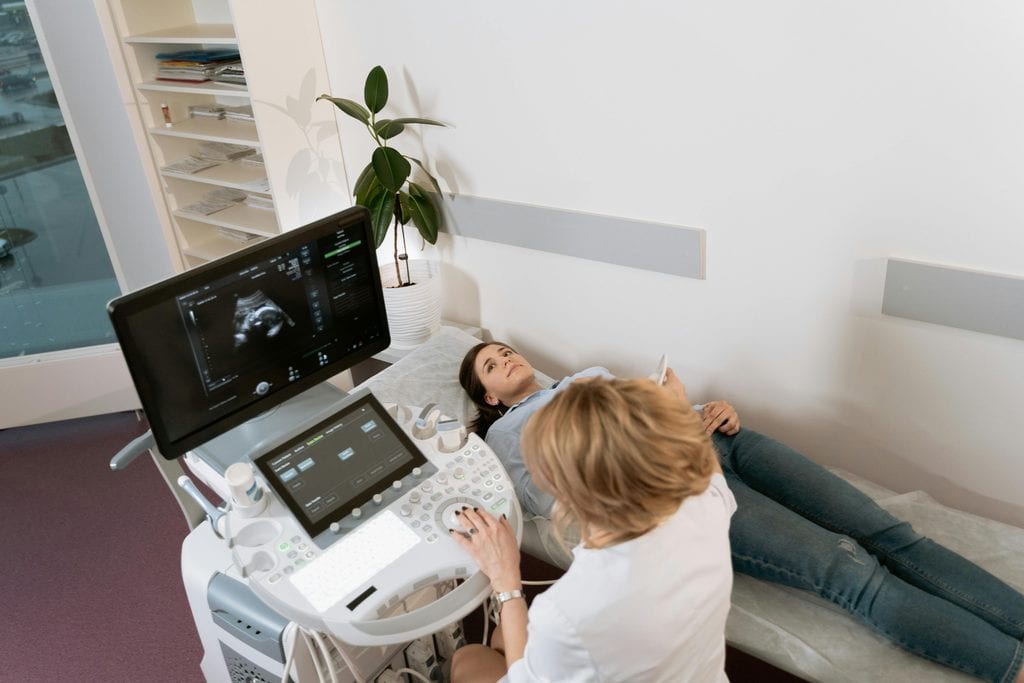
Who Can Benefit from a Private Abdominal Ultrasound?
Our private abdominal ultrasound service in Birmingham is available to both men and women who require diagnostic imaging for a range of abdominal symptoms.
Common Reasons for Booking an Abdominal Ultrasound
- Persistent or recurring abdominal pain.
- Upper abdominal discomfort.
- Abdominal bloating or swelling.
- Suspected gallstones.
- Abnormal liver function tests.
- Suspected fatty liver disease.
- Kidney or flank pain.
- Recurrent urinary tract infections.
- Monitoring known liver or kidney abnormalities.
- Unexplained abdominal fullness.
- Suspected enlargement of abdominal organs.
- Follow-up of previously identified cysts or other abnormalities.
An abdominal ultrasound may be recommended by your GP or another healthcare professional as part of a wider investigation.
What Is Included in Your Private Abdominal Ultrasound Appointment?
What Is Included in Your Private Abdominal Ultrasound Appointment?
At Midlands Women’s Health, our Sonographer-led abdominal ultrasound service provides a professional and thorough diagnostic assessment.
Your appointment includes:
- Clinical History Review: Discussion of your symptoms, relevant medical history and reason for requesting the examination.
- Experienced Sonographer: Your scan is performed by a qualified professional experienced in general diagnostic ultrasound imaging.
- External Abdominal Ultrasound: A non-invasive examination using an ultrasound probe moved across the abdomen.
- Assessment of Abdominal Organs: Examination of the liver, gallbladder, visible bile ducts, kidneys, pancreas, spleen and abdominal aorta, as clinically appropriate.
- Diagnostic Image Capture: Ultrasound images obtained to support assessment and reporting.
- Patient Guidance: An explanation of the examination and what to expect throughout your appointment.
- Diagnostic Ultrasound Report: A written report documenting the findings.
- Recommendations for Further Assessment: Where appropriate, the report may recommend additional investigations or review by your GP or relevant specialist.
The structures assessed will depend on the scan requested, the clinical indication and whether adequate ultrasound views can be obtained.
How to Prepare for Your Abdominal Ultrasound Scan

Correct preparation is important to help your Sonographer obtain clear images of your abdominal organs.
Fasting Before Your Abdominal Ultrasound
For a routine upper abdominal ultrasound, patients are generally advised to avoid eating for approximately 6 hours before their appointment.
This helps reduce bowel gas and allows better visualisation of the gallbladder and surrounding organs.
Before your appointment:
- Avoid eating food for approximately 6 hours before your scan, unless advised otherwise.
- You may usually drink clear, non-fizzy fluids such as water.
- Avoid milk, milky drinks and fizzy drinks during the fasting period.
- Continue prescribed medication unless your healthcare professional advises otherwise.
- Wear comfortable, loose-fitting clothing that allows easy access to your abdomen.
- Bring any relevant previous scan reports, blood test results or referral information.
Important: If you have diabetes, take insulin or medication affected by fasting, or have another medical condition requiring regular food intake, please contact our team before your appointment for individual preparation advice.
Do I Need a Full Bladder?
A full bladder is not normally required for an upper abdominal ultrasound alone.
However, if your examination also includes the urinary bladder or pelvic organs, you may be asked to drink water beforehand and avoid emptying your bladder until after the scan.
Our team will provide preparation instructions appropriate to your booked examination. Optimal timing may depend on the reason for your scan. Our team can advise if a particular stage of your menstrual cycle is preferable.
What Happens During an Abdominal Ultrasound Scan?
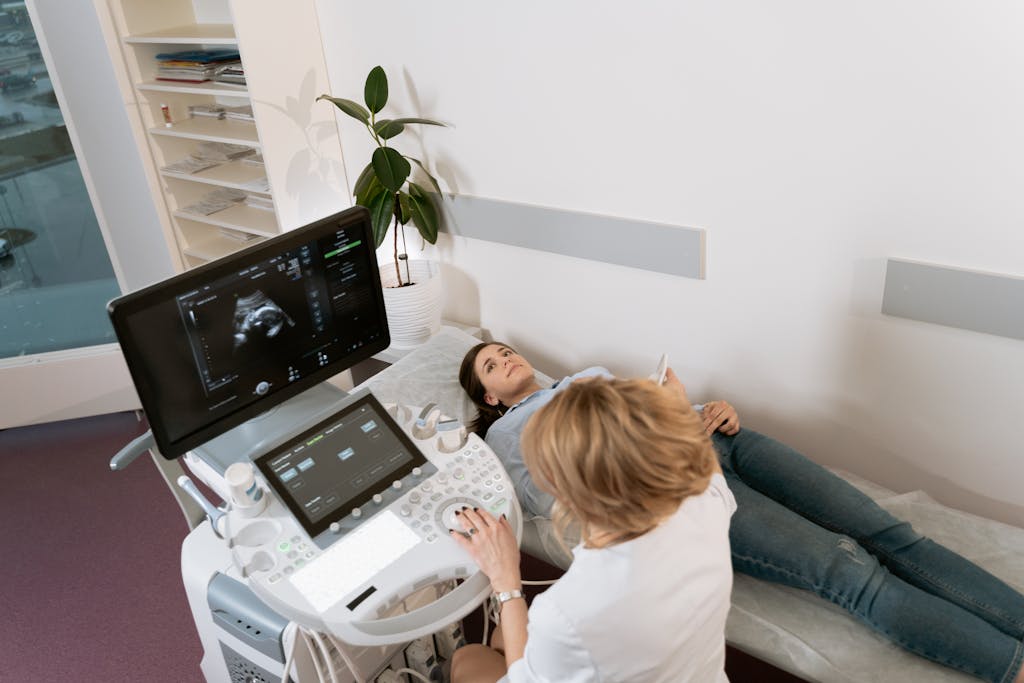
Your examination is straightforward, non-invasive and generally comfortable.
Step 1 – Initial Discussion
Your Sonographer will review your symptoms and medical history, explain the procedure and confirm your consent.
Step 2 – Positioning
You will be asked to lie comfortably on an examination couch, usually on your back.
Step 3 – Ultrasound Examination
A clear, water-based gel is applied to your abdomen. Your Sonographer will gently move the ultrasound probe across the skin to capture images of the organs.
You may be asked to change position, take a deep breath or briefly hold your breath to improve the ultrasound images.
Step 4 – Diagnostic Imaging
The Sonographer will assess the relevant abdominal organs, documenting their appearance and any visible abnormalities.
Step 5 – Completion and Reporting
Once the examination is complete, the gel can be wiped away and you can normally return to your usual activities immediately.
A diagnostic report will document the ultrasound findings.
How Long Does an Abdominal Ultrasound Take?
A routine abdominal ultrasound generally takes approximately 20–30 minutes, although this can vary depending on the organs being examined and the complexity of the findings.
Some examinations may take longer if additional images or measurements are required.
What Happens After My Abdominal Ultrasound?
Following your examination, a diagnostic ultrasound report will be prepared, documenting the findings.
Your report can be shared with your referring healthcare professional, GP or relevant specialist to support ongoing medical assessment.
Depending on the results, further investigations or a specialist consultation may be recommended.
An ultrasound provides valuable diagnostic information, but it does not replace a full medical assessment, particularly when symptoms are persistent or worsening.
Why Choose Midlands Women’s Health for Imaging?
Experienced Sonographer
Our ultrasound examinations are performed by a highly experienced Sonographer with over 20 years of clinical experience across the NHS and private healthcare, including general diagnostic imaging.
Ultrasound Services for Both Men and Women
Although Midlands Women’s Health is recognised for its specialist women’s health services, our general abdominal ultrasound service is available to both male and female patients.
Comprehensive Diagnostic Imaging
We assess a range of important abdominal organs, helping investigate symptoms and identify abnormalities that may require further medical attention.
Comfortable, Professional Environment
We understand that undergoing medical investigations can sometimes feel worrying. Our team provides a welcoming, respectful and reassuring environment throughout your appointment.
Personalised Patient Care
Every examination is tailored to the clinical indication, ensuring that relevant symptoms and medical history are considered.
Private Ultrasound Services in Birmingham
Our private diagnostic ultrasound service provides an accessible option for patients seeking professional abdominal imaging in Birmingham and the surrounding Midlands.
Helpful Websites & Support Resources
| Organisational Name | Link | Description |
| Royal College of Obstetricians and Gynaecologists | https://www.rcog.org.uk/for-the-public/ | Provides evidence-based information about gynaecological conditions and investigations, including the role of imaging in assessing symptoms such as pelvic pain, heavy bleeding, fibroids, ovarian cysts, and fertility concerns. |
| NHS | https://www.nhs.uk/conditions/ultrasound-scan/ | Trusted NHS information explaining how ultrasound scans work, what they are used for, how to prepare, and what patients can expect during the procedure. Pelvic ultrasound is commonly used to assess the womb, ovaries, and surrounding pelvic structures. |
| RadiologyInfo | https://www.radiologyinfo.org/ | Provides patient-friendly information about medical imaging tests, including pelvic ultrasound and MRI scans, explaining why they are performed, how they work, and what patients can expect. |
| Women’s Health Concern | https://www.womens-health-concern.org/ | Provides accessible, evidence-based information on women’s health conditions, symptoms, and investigations, helping patients understand common gynaecological problems and diagnostic pathways. |
Frequently Asked Questions
Yes. At Midlands Women’s Health, our abdominal ultrasound scans are available to both male and female patients. The examination assesses abdominal organs such as the liver, gallbladder, kidneys, pancreas and spleen.
An abdominal ultrasound is generally painless. You may feel gentle pressure as the probe moves across your abdomen, particularly if the area is already tender.
Can a pelvic ultrasound detect ovarian cysts?
Yes. Pelvic ultrasound is commonly used to identify and assess ovarian cysts, including their size and ultrasound appearance.
Yes. Ultrasound is commonly used to identify uterine fibroids and assess their location and size.
Yes. Ultrasound is commonly used as a first-line imaging investigation for suspected gallstones and can also assess the appearance of the gallbladder and visible bile ducts.
Yes. Ultrasound can identify appearances suggestive of fatty liver, although mild changes may not always be visible. Additional tests may be needed to assess liver health and fibrosis.
Ultrasound can identify some kidney stones and signs of urinary obstruction. However, smaller stones or stones within the ureters may not be visible, and a CT scan may sometimes be required
An abdominal ultrasound can identify some suspicious masses or abnormalities in the abdominal organs, but it cannot reliably detect or exclude every cancer. Further investigations may be needed if concerning findings or symptoms are present.
A normal ultrasound does not exclude every abdominal condition. If symptoms continue, further assessment by your GP or an appropriate medical specialist may be recommended.
Have Questions? Contact Us
Not sure which service is right for you?
Our friendly team at Midlands Women’s Health, a private health clinic in Birmingham, is here to help
Get in Touch With Us
Address
Kat and Co, 20 Calthorpe Road, Edgbaston, Birmingham, B15 1RP
Phone

We provide fast, confidential, and patient-centered care to women across Birmingham and the Midlands
Let us help you take the next step towards better pelvic health, personalised gynaecology care, and improved quality of life.